藏獒
Tibetan Mastiff
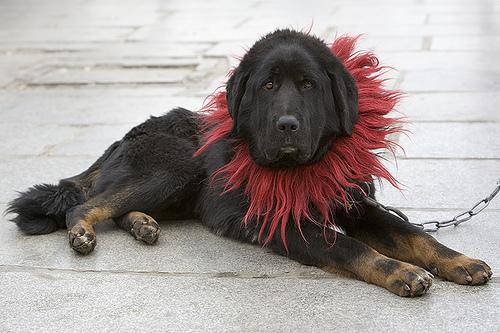
本条目简介尚在编纂。可先参阅下方博物志,或到手记留下你的经验。
🐾性情
As a flock guardian dog in Tibet, and in the West, it uses all the usual livestock guardian tactics (e.g., barking, scent-marking perimeters) to warn away predators and avoid direct confrontations. As a socialized, more domestic dog, it can thrive in a spacious, fenced yard with a canine companion, but it is not an appropriate dog for apartment living. The Western-bred dogs are generally more easy-going, although still somewhat aloof with strangers. Through hundreds of years of selective breeding for a protective flock and family guardian, the breed has been prized for being a nocturnal sentry
🌿健康
Many breeders claim a life expectancy of 10–16 years, but these claims are unsubstantiated. Some lines do produce long-lived dogs. Other, more closely inbred lines, produce short-lived, unhealthy dogs. The breed has fewer genetic health problems than many breeds, but cases can be found of hypothyroidism, entropion, ectropion, distichiasis, skin problems including allergies, autoimmune problems including demodex, Addison's disease, Cushing's disease, missing teeth, malocclusion (overbite, underbite, dry mouth), cardiac problems, seizures, epilepsy, progressive retinal atrophy (PRA), cataracts,
👁形貌
It typically retains the hardiness which would be required for it to survive in Tibet, Ladakh and other high-altitude Himalayan regions. Instinctive behaviors, including canine pack behavior, contributed to the survival of the breed in harsh environments. It is one of the few primitive dog breeds that retains a single estrus per year instead of two, even at much lower altitudes and in much more temperate climates than its native climate. This characteristic is also found in wild canids such as the wolf and other wild animals. Since its estrus usually takes place during late autumn, most Tibeta
📜源流
Originally these dogs were used to protect Buddhist monasteries and monks of Tibet from animals such as bears, wolves and snow leopards. The Tibetan Mastiff is a phenotypically distinct dog breed that was bred as a flock guardian in the high altitudes of the Himalayas and the Tibetan Plateaus. Meer Izzut-oollah (1872) wrote of the Tibetan Mastiff: The dogs of Tibet are twice the size of those seen in India, with large heads and hairy bodies. They are powerful animals...During the day they are kept chained up, and are let loose at night to guard their masters' house. In the early 20th century,